
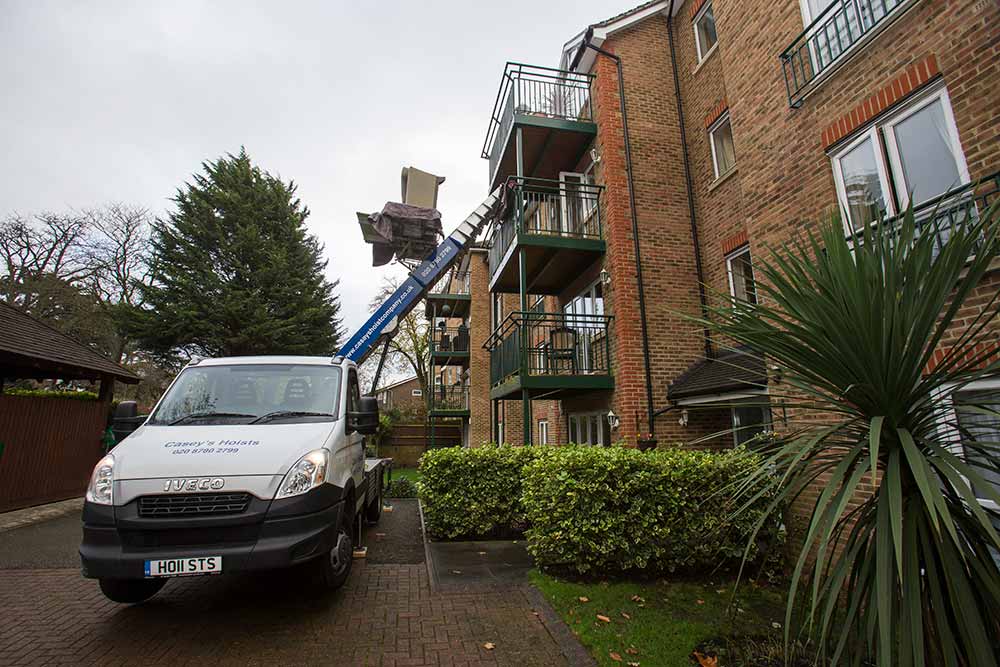
Furniture hoisting is a safe and efficient method of lifting large or heavy items into buildings using external hoists. It is commonly used when staircases are too narrow or lifts are unavailable. In London, furniture hoisting helps prevent damage, reduces risk, and ensures smooth delivery in challenging properties.
What Is Furniture Hoisting and How Does It Work?
Furniture hoisting involves lifting items vertically using a mechanical platform positioned outside a building. This method allows movers to bypass internal access issues.
A trained operator sets up the hoist securely. Then, items are carefully loaded and lifted to the required floor. As a result, movers avoid tight corners and awkward staircases.
This process is both controlled and efficient. Therefore, it is often the safest option for moving large or fragile items in London.
Key Signs You Need to Hoist Furniture
Not every move requires hoisting. However, certain situations make furniture hoisting the best solution.
For example, if your staircase is too narrow, moving bulky items becomes risky. Similarly, if your building has no lift, carrying heavy furniture upstairs can be dangerous.
Another clear sign is restricted access. Many London properties have tight hallways or sharp turns. In these cases, it is often safer to hoist furniture externally.
Additionally, if you are moving valuable or delicate items, hoisting reduces the risk of accidental damage.
Common London Scenarios That Require Furniture Hoisting
London buildings often present unique challenges. As a result, furniture hoisting is widely used across the city.
Typical scenarios include:
- Flats located on upper floors without lift access
- Period properties with narrow staircases
- Listed buildings with restricted internal movement
- Rooftop apartments and penthouses
- Commercial spaces such as hotels, bars, and theatres
In each case, hoisting provides a practical and efficient solution.
Risks of Not Using Professional Hoisting Services
Choosing not to use furniture hoisting can lead to serious issues. Manual handling of heavy items increases the risk of injury.
In addition, walls, floors, and staircases can easily be damaged. Repairs can be costly and time-consuming.
Furthermore, furniture itself may be scratched, dented, or structurally weakened. Therefore, using professional hoisting services helps avoid unnecessary risks.
The Furniture Hoisting Process Explained
Understanding the process can help you prepare for your move. Professional furniture hoisting services follow a structured approach.
First, the team conducts a site assessment. This ensures the correct equipment and setup are used. Next, they position and secure the hoist safely.
Items are then wrapped and protected before lifting. During the lift, operators monitor stability and control movement carefully.
Finally, items are safely brought into the property and positioned as required. This method ensures both safety and efficiency.
Why Professional Experience Matters in Furniture Hoisting
Experience is crucial when it comes to furniture hoisting. Skilled operators understand how to handle different items and building types.
They also follow strict safety procedures. This reduces the risk of accidents and ensures compliance with regulations.
Moreover, professional companies provide insurance cover. This adds peace of mind when moving valuable items.
By choosing an experienced provider, you ensure a smooth and reliable moving experience.
FAQ – Quick Answers for Furniture Hoisting
What is furniture hoisting used for?
It lifts large or heavy items into buildings with limited access.
When should I hoist furniture instead of carrying it?
When stairs are narrow, access is restricted, or items are too heavy.
Is furniture hoisting safe?
Yes. Professionals use secure equipment and trained operators.
Can I hoist furniture into a flat?
Yes. Hoisting is ideal for upper-floor flats without lift access.
How long does furniture hoisting take?
Most lifts are completed quickly, depending on height and complexity.